
Parenting is hard work. It’s both an art and a science. It’s about balancing what we think is best for our children while also honoring their own desires; choosing between enforcing the rules and ‘choosing our battles’ as they call it; disciplining and knowing when to let our children discover the natural consequence(s) of their behavior; teaching them while also letting them explore the world at their own pace; maintaining some sort of routine while also living in the moment and going with the flow of their own ideas.
Our relationship with our children is a give and take – A delicate dance that we do on a daily basis, keeping their best interest in mind while also honoring their own personhood. It’s messy and imperfect but a beautiful ride nonetheless.
Thinking about this ‘dance,’ this give and take, highlights how much control parents truly have over their children. And rightfully so, right? After all, it is our jobs to feed them, keep them on some sort of schedule, supervise them, stimulate them, teach them, etc.
But what if we let our children have more control? What would it mean for them? For us? For the relationship?
What would that even look like? To me it means giving my children more choices throughout the day. More opportunities to speak their mind and choose what they want to do instead of making all of the decisions for them.
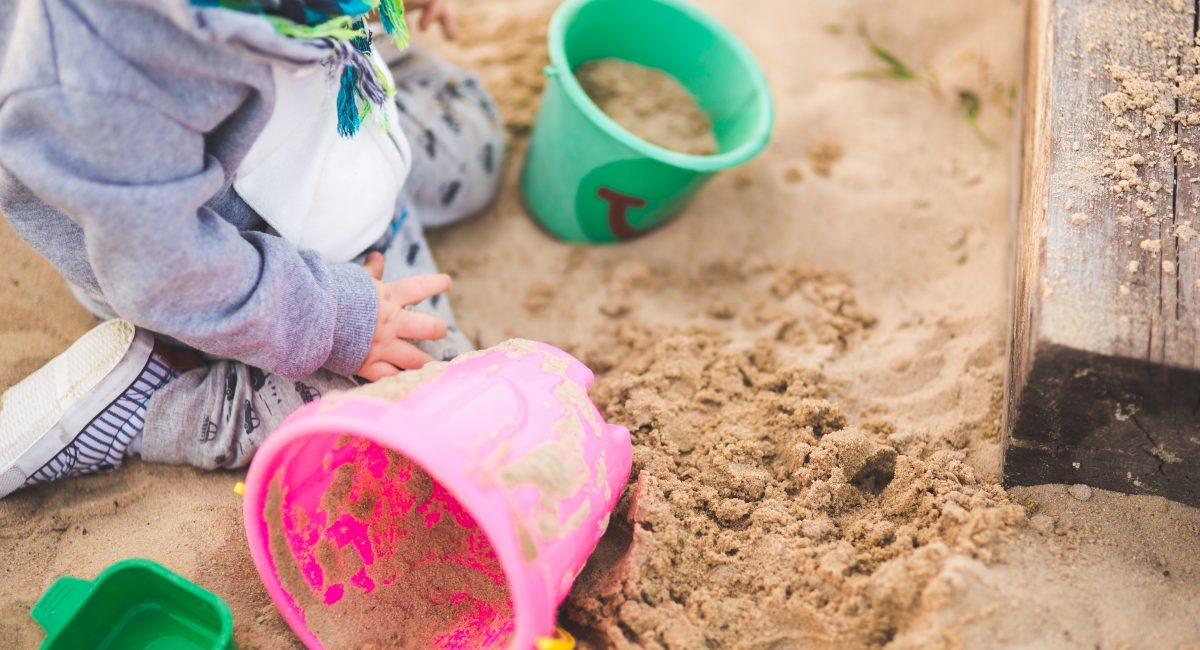
Today, I challenge all of you (myself included) to let your children take the lead just a little more. This will look like different things to different children. It will be dependent on personality, age, environment, opportunities, etc. For instance, knowing my 18-month-old and what she enjoys most, giving her more control would probably mean staying longer at the playground. It would also probably mean not intervening when she playfully throws sand in the air and it lands in her hair. While she finds this funny and enjoyable, I of course always cringe and re-direct. But letting her take control might mean something different for her. And if you have an older child, such as a teenager, it will look completely different.
Today, I will intentionally look for opportunities during the day to let her decide what she wants to do (e.g., What to eat for lunch, what book to read during story time, what to wear, when to leave + go, etc). Then I will buckle up, bite my tongue, and enjoy the ride. Let her be the leader, and I the follower, for once. This sort of intentionality takes a lot of patience and flexibility. It takes trust in the process and respect for her ideas. Because of this, it’s also going to take plenty of practice.
But letting our children take back some control is important. It’s important for several different reasons including that it:
- Increases children’s self-esteem and their ability to trust in their own decision-making skills
- Allows children to learn what they want at their own pace
- Increases children’s autonomy
- Helps children learn problem solving
- Improves the parent-child relationship
- Increases children’s overall happiness and satisfaction
- Helps develop their personality and allows children to learn about themselves
Now, I don’t mean let go of all structure and fly by the seat of your pants. Keep the ‘science’ of it all. I’m just encouraging you to try and honor the ‘art’ side of parenting a bit more. Art is messy but it also sparks innovation, growth, and imagination.
Thanks for reading!